



1. Selecting the Appropriate Material: The Key to Perfect Size Design
The fundamental challenge in small-sized cosmetic packaging is balancing “support and protection in limited space” — and the material ultimately dictates a carton’s load-bearing capacity. Different materials vary widely in thickness and stiffness, so they must be perfectly matched to the product’s weight.
1.1 Examination of Typical Material Characteristics
Below are core properties of common materials for cosmetic cartons, optimized for both functionality and aesthetics:
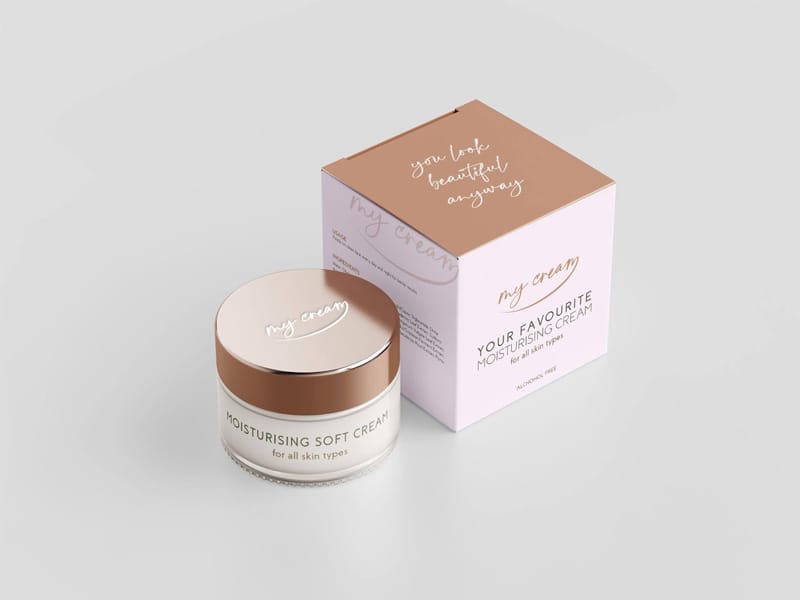
- White Cardboard:
An “all-purpose choice” for cosmetic packaging, with high stiffness and excellent color reproduction.
- Typical weight range: 210–400g (thickness: 0.275−0.535mm)
- Performance: 300g white cardboard (0.4mm thick) easily supports cream jars under 100g.
- Compatibility: Works with gold stamping, UV coating — ideal for products needing an exquisite look.
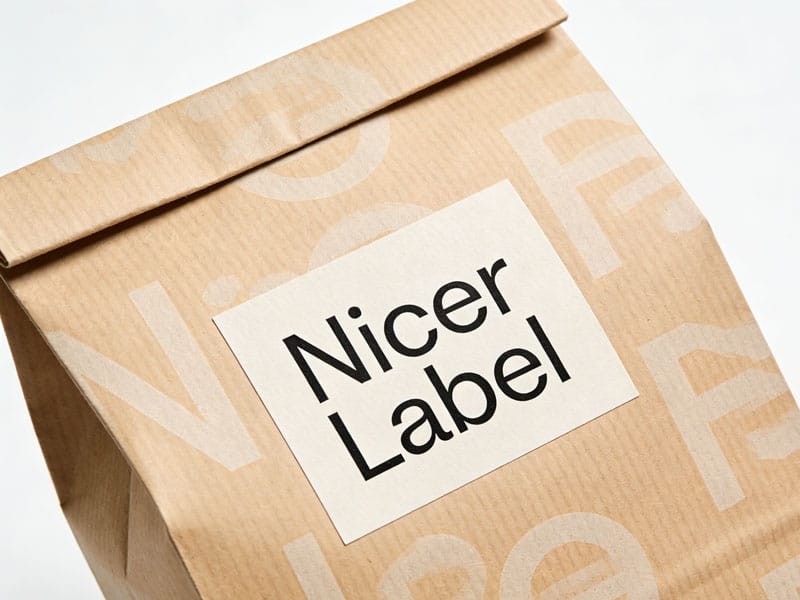
- Kraft Paper:
Focuses on toughness and eco-friendliness, a top pick for retro-style packaging.
- Standard specification: 120–300g (thickness: 0.12–0.35mm)
- Strength: 300g kraft paper has far higher ring crush resistance than same-weight white cardboard.
- Suitability: Holds glass essential oil bottles under 200g.
- E-Flute Corrugated Board:
Thin yet high-performance, great for reducing logistics weight costs.
- Thickness: ~1.5mm
- Support: 30% higher than ordinary cardboard, with strong compression resistance.
- Use case: Multi-piece cosmetic sets or heavier products (over 200g).
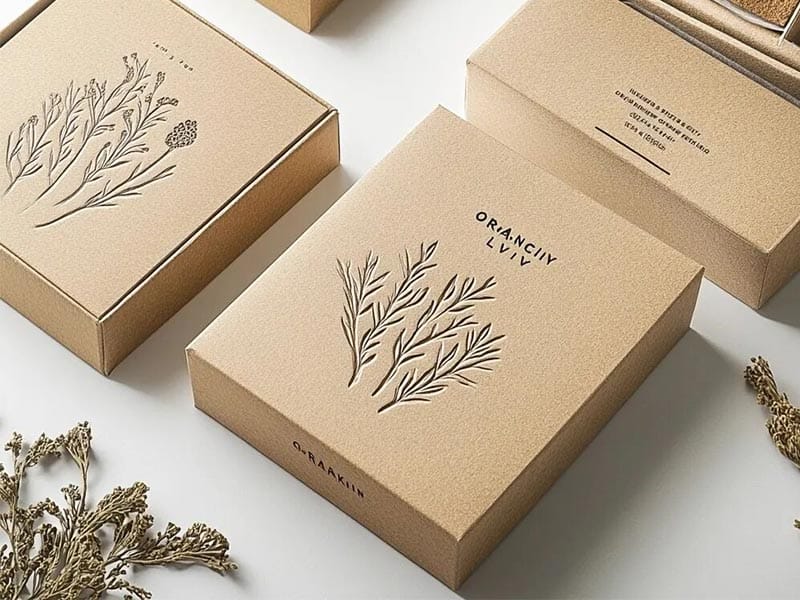
- Specialty Paper (e.g., textured art paper):
Boosts texture for high-end sample packaging, requires inner lining.
- Thickness: 0.2–0.4mm (weight: 200–300g)
- Support: Moderate (needs lining for stability).
1.2 Material & Support Correspondence Table for Small-Sized Cosmetics
Material Type | Common Weight/Thickness | Support Level | Suitable Products (Weight) | Inner Lining Recommendation | Key Notes |
White Cardboard | 210-400g/0.275-0.535mm | Medium | Cream jars (50-100g) | No lining needed | Excellent color printing effect |
Kraft Paper | 250-300g/0.3-0.35mm | Medium-High | Essential oil bottles (100-200g) | Optional paper tray | High tear resistance, eco-friendly |
E-Flute Corrugated Board | 1.5mm | High | Sets over 200g | Corrugated corner protectors | Balances cushioning and support |
Specialty Paper | 200-300g/0.2-0.4mm | Medium | Samples under 50g | EPE foam wrapping | Needs matching processes (e.g., embossing) for texture |
2. Size Calculation: Precision to Millimeters
After choosing the material, size design must balance “accommodation” and “protection.” Use this core formula for accuracy:
Carton Inner Diameter = Maximum Product Dimension + 2×Material Thickness + Buffer Allowance
2.1 Primary Dimension Measurement Tips
To avoid fit issues, measure the product’s “3D maximum values” and reserve buffer space:
- For essential oil bottles: Measure mouth diameter, maximum body outer diameter, and total height.
- For cream jars: Measure mouth diameter, body thickness, and total height (with lid).
- Buffer space rules:
- 3–5mm per side for glass products (prevents breakage).
- 2–3mm per side for plastic products (avoids shaking/friction during transport).
2.2 Example Calculation (100ml Glass Essential Oil Bottle)
Let’s apply the formula to a common product: 100ml glass essential oil bottle (diameter 50mm, height 130mm, weight 180g):
- Material choice: 300g kraft paper (0.35mm thick, meets support needs).
- Inner diameter calculation:
- Diameter: 50mm + (2×0.35mm) + 4mm (buffer) = 54.7mm
- Height: 130mm + (2×0.35mm) + 3mm (buffer) = 133.7mm
- Outer diameter calculation: Add 2×material thickness to inner diameter → 55.4mm × 134.4mm.
3. Inner Lining Design: Building the “Final Protective Barrier”
When a product’s weight exceeds the material’s load limit (e.g., glass jars over 200g), inner linings are critical. Choose solutions based on protection needs:
3.1 Basic Protection (Under 100g)
- Material: Cardboard over 200g (die-cut into inner trays).
- Design: Grooves 3mm wider per side than the product (locks cream jars in place).
3.2 Enhanced Protection (100–200g)
- Structure: “Corrugated corner protectors + cardboard base” composite.
- Steps: Cut E-flute corrugated paper into L-shaped protectors (paste on carton walls); use cardboard as bottom support.
- Benefit: Distributes essential oil bottle weight, prevents carton deformation.
3.3 Advanced Protection (Over 200g)
- Material: 1–3mm thin EPE foam (die-cut into grooves).
- Process: Wrap the product in foam, then embed in the carton.
- Advantages: Offsets transport impacts; costs 50% less than traditional sponge.
4. Pitfall Avoidance Guide: Key Details for Small-Sized Cosmetic Cartons
- Don’t exceed material thickness limits: Cardboard over 400g for small cartons tends to crack — keep it under 350g.
- Test load-bearing performance: After making samples, invert the carton (with product inside) for 24 hours. Check for collapse or lining shift.
- Adapt to process requirements: Gold stamping, embossing, or other finishes increase paper thickness — reserve an extra 0.1–0.2mm during design.
5. Conclusion
The success of small-sized cosmetic packaging lies in a “triangular support system”: material, size, and inner lining. Even small choices — like 300g kraft paper vs. E-flute board, or 3mm vs. 5mm buffer — directly impact product integrity and consumer perception. Master these steps to maximize every inch of carton space.