


Packaging buyers are entering a more demanding market. Customers still want convenient, lightweight packaging, but regulators and brand teams increasingly expect environmental claims to be specific, documented and connected to a realistic end-of-life route.
This is why the next stage of sustainable flexible packaging will not be driven by the word “green” alone. Buyers will look more closely at the material formulation, bag performance, certification scope, print quality, minimum order quantity and price.
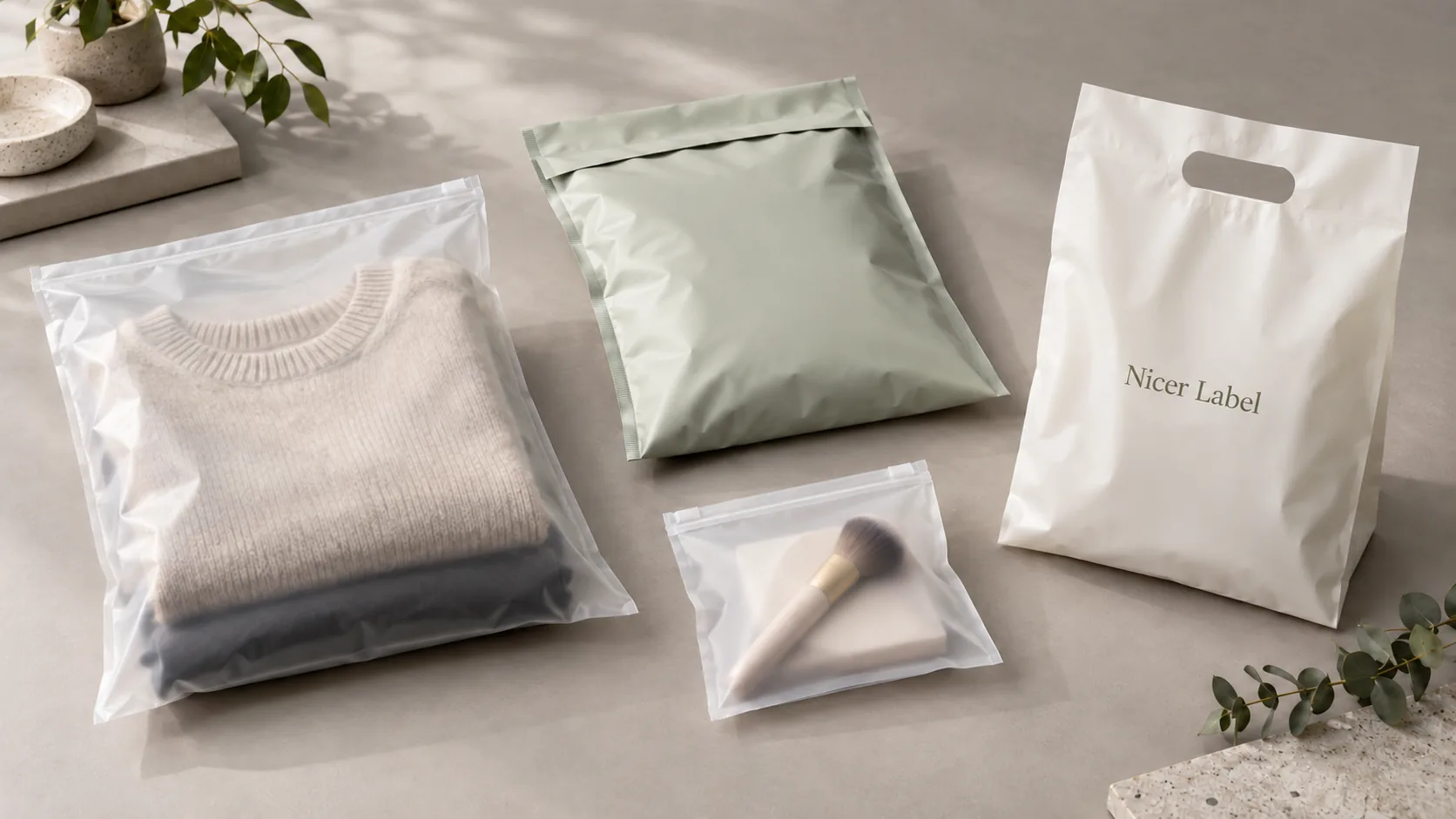
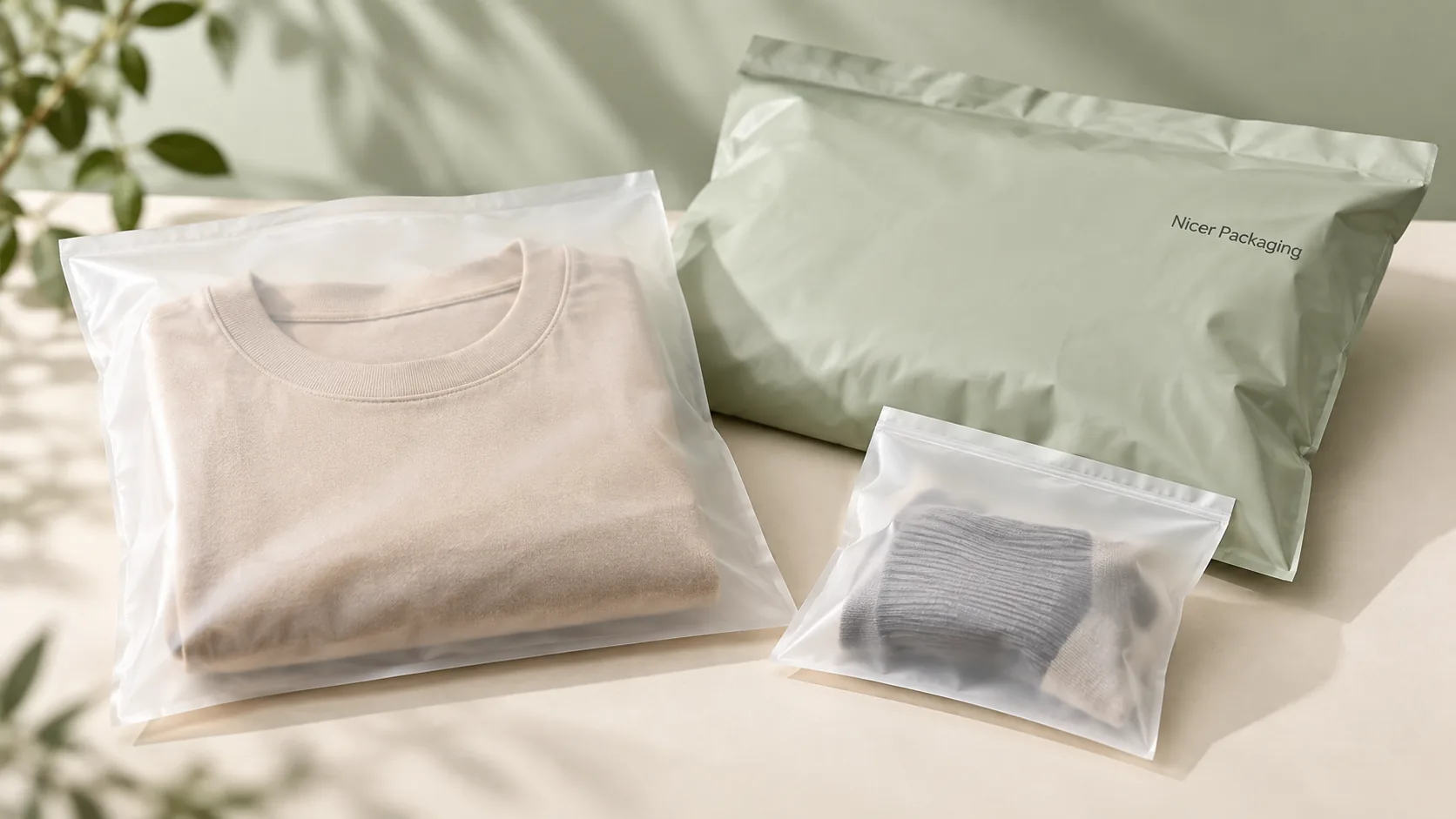
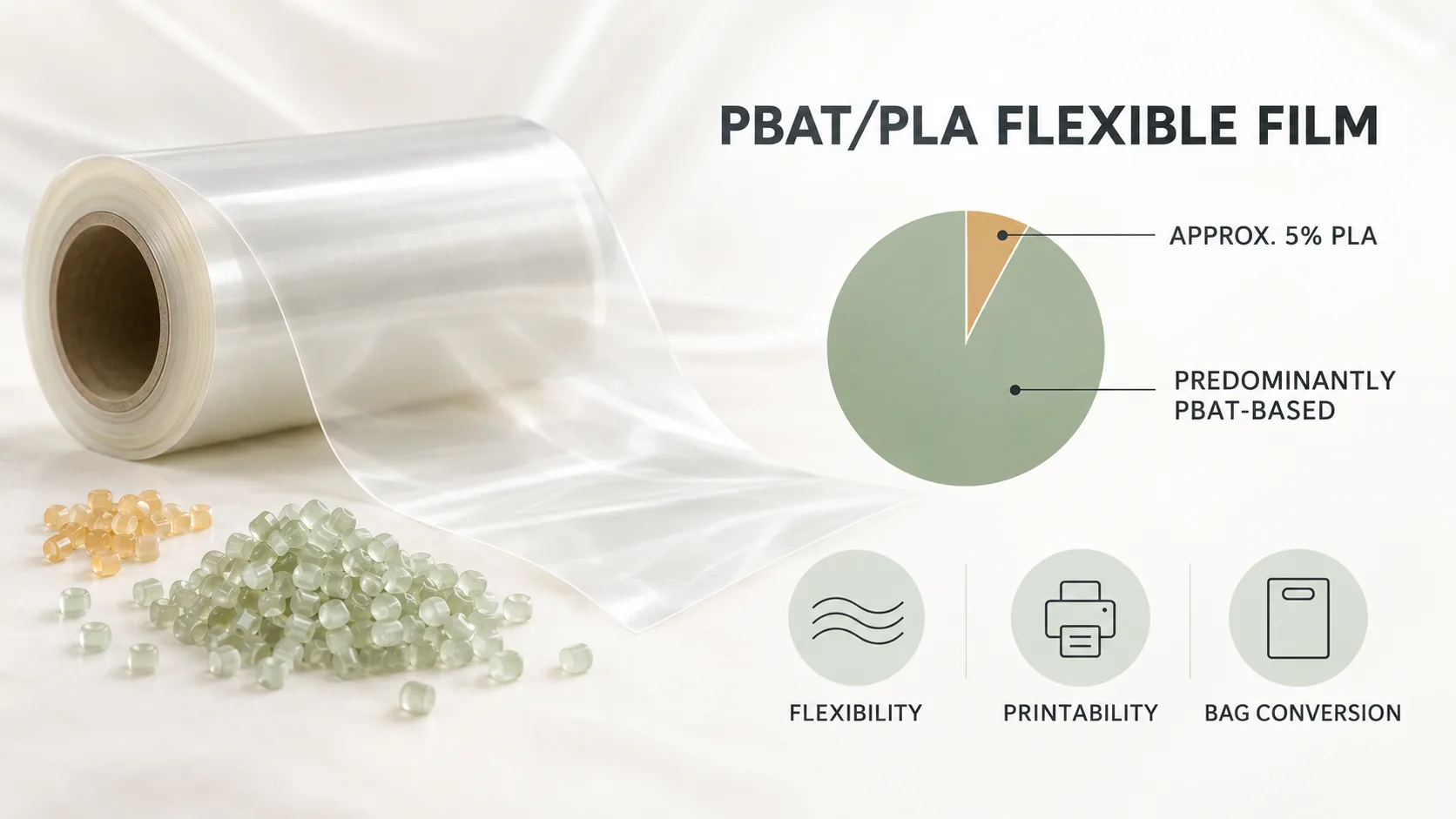
For brands sourcing custom mailing bags, apparel inner bags or flexible secondary packaging, PBAT-based compostable bags with PLA can offer a practical balance. Nicer Label supplies custom bags made from a formulation containing approximately 5% PLA, with the main polymer component being PBAT. The formulation is designed around the flexibility required for film and bag applications rather than around an artificially high PLA percentage.
Just as importantly, our material supply chain includes supporting compostability documentation for selected PBAT grades. Combined with cost-competitive sourcing and customization, this gives international brands a more credible basis for evaluating their next packaging project.
Why Compostable Packaging Will Receive More Attention in 2027
The bioplastics sector is still small compared with the total plastics market, but its production base is expanding. European Bioplastics forecasts that global biobased plastics production capacity will increase from approximately 2.31 million tonnes in 2025 to about 4.69 million tonnes by 2030. Packaging remains one of the most important application areas for bioplastics.
At the same time, the market is becoming more selective. The EU Packaging and Packaging Waste Regulation generally began to apply on August 12, 2026. Its direction is clear: reduce unnecessary packaging, lower the use of primary raw materials and improve the recoverability of packaging placed on the European market.
This does not mean that every conventional plastic bag should automatically be replaced by a compostable one. The best packaging format depends on the product, local regulations, collection infrastructure and the end-of-life route available in the target market.
However, several developments are likely to increase demand for well-documented compostable bags:
- brands are being asked to explain packaging materials more clearly;
- vague environmental claims face greater legal and reputational risk;
- e-commerce and apparel businesses need lighter secondary packaging options;
- buyers want alternatives for packaging that may be difficult to reuse or mechanically recycle in practice;
- procurement teams increasingly request certificates, technical data and traceable material information before approving a supplier.
The result is a shift from eco-friendly appearance to evidence-supported packaging decisions.
What Is a PBAT/PLA Compostable Bag?
PLA and PBAT are different polymers with complementary characteristics.
PLA, or polylactic acid, is commonly associated with renewable feedstocks and can provide stiffness and strength. However, a high-PLA film can be too rigid or brittle for some flexible-bag applications.
PBAT, or polybutylene adipate-co-terephthalate, is valued for flexibility, elongation and film-processing performance. Peer-reviewed research on PLA/PBAT blends describes PLA as contributing strength while PBAT contributes flexibility. This complementary relationship is one reason the two materials are frequently considered together for flexible packaging.
Our bag formulation contains approximately 5% PLA and is predominantly PBAT-based. This is not a “100% PLA bag.” The material balance is selected to support the flexibility and toughness expected from a mailing bag, garment bag or other flexible packaging format.
The exact finished performance will still depend on bag thickness, dimensions, sealing, printing, storage conditions and the complete formulation. For this reason, Nicer Label recommends testing samples with the customer’s actual product and packing process before mass production.
Why a PBAT-Based Formulation Can Work Better for Flexible Bags
Packaging should be selected for the job it needs to perform. A material name alone does not guarantee that a bag will survive filling, sealing, storage and delivery.
For flexible packaging, a PBAT-led formulation can provide several practical advantages:
1. Flexibility for Packing and Shipping
PBAT helps create a softer, more flexible film than a typical high-PLA structure. This is relevant for mailers, apparel packaging and other bags that must bend around a product without cracking easily.
2. Better Suitability for Film Conversion
Flexible bags require reliable film formation, heat sealing and cutting. A formulation developed specifically for blown-film and bag-making processes can be more useful than choosing a polymer only because its name is familiar to consumers.
3. Customizable Brand Presentation
The bags can be evaluated for custom dimensions, film color, surface finish, logo printing, warning text, disposal instructions and other brand information. Final options depend on the bag structure, order quantity and artwork.
4. Reduced Packaging Weight
Flexible bags are naturally lightweight. When properly specified, they can protect products while avoiding the weight and storage volume associated with some rigid secondary packaging formats.
5. A More Competitive Path to Compostable Packaging
Cost remains one of the biggest barriers to changing packaging materials. Nicer Label combines material sourcing with custom production support to provide cost-competitive pricing, particularly for commercial quantities and repeat programs.
We do not recommend comparing quotations only by unit price. Buyers should also confirm thickness, bag size, printing coverage, sealing design, packing quantity, certification scope and freight volume. A lower price based on a thinner or different specification is not a true like-for-like comparison.
Our Material Documentation Advantage
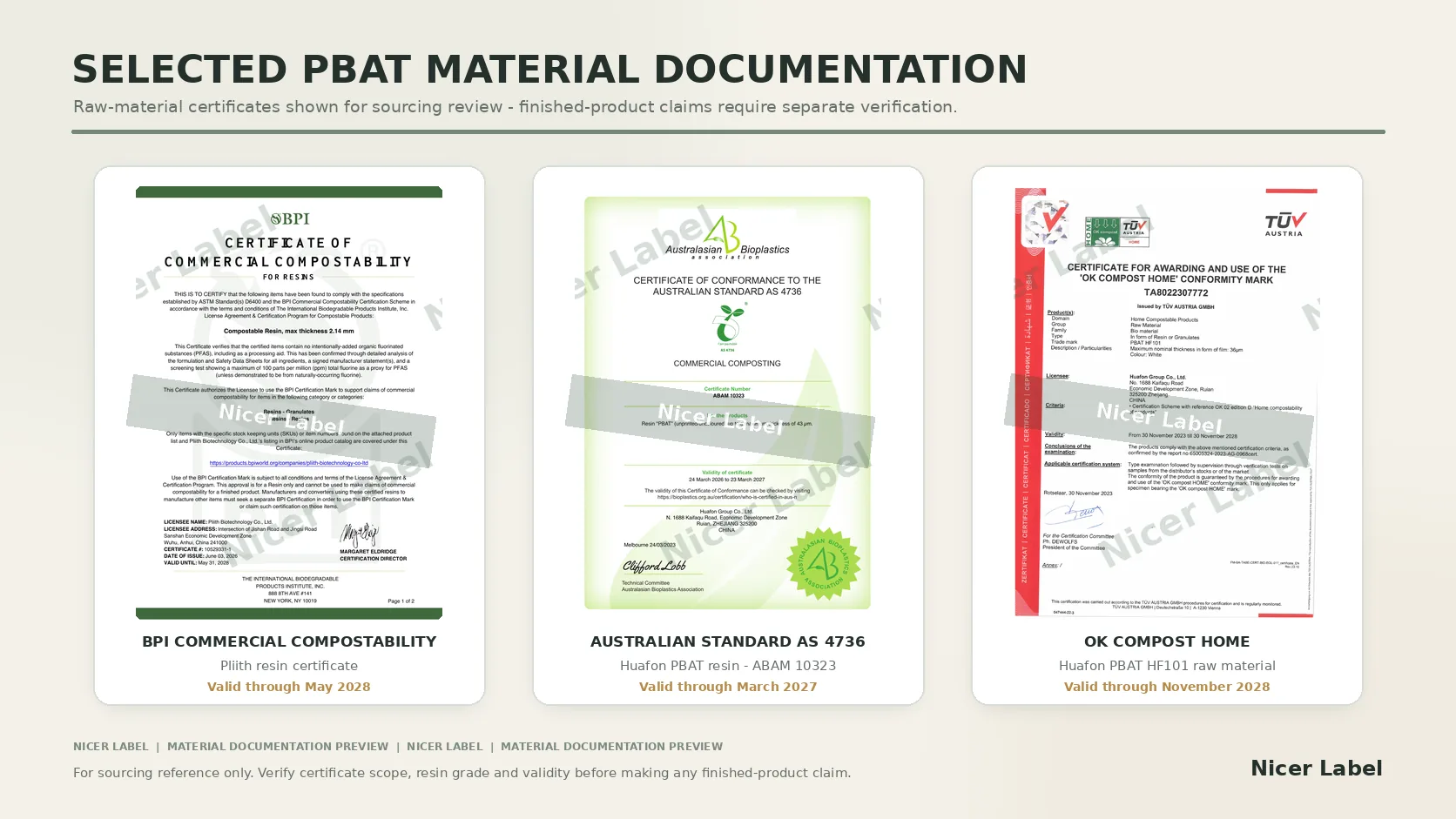
Environmental claims should be supported by documentation, not just supplier descriptions. For selected PBAT raw-material grades used in our supply chain, documentation available for project review includes:
- a BPI Commercial Compostability Certificate for Resins issued to Pliith Biotechnology Co., Ltd., valid through May 31, 2028;
- an Australian Standard AS 4736 commercial-composting certificate for unprinted and uncoloured Huafon PBAT resin, certificate ABAM 10323, valid through March 23, 2027;
- an OK compost HOME certificate for Huafon PBAT HF101 raw material, valid through November 30, 2028.
These documents can help buyers evaluate the raw-material route and select an appropriate formulation for their target market.
There is an important distinction, however: a certificate for a resin, component or raw material does not automatically certify every finished bag made with that material. BPI specifically states that referring to certification of a component when the finished item is not certified is an improper use of the BPI mark.
If a customer needs to display the BPI mark, OK compost HOME mark or another certification logo on the finished bag, the exact finished product, formulation, dimensions, thickness, inks and certification or sublicensing route must be reviewed. Certificate validity and product scope should also be reconfirmed at the time of order.
This transparent approach protects both the supplier and the brand from accidental greenwashing.
Compostable Is More Precise Than Biodegradable
Many buyers search online for “PLA biodegradable bags,” but compostable is usually the more useful term when a product has been assessed for a defined composting environment.
“Biodegradable” does not, by itself, tell a buyer where the material breaks down, how long it takes or under what temperature and humidity conditions. BPI advises certified products and packaging to use “compostable” rather than a general biodegradable claim. It also notes that several US states restrict the use of “biodegradable” in marketing for single-use products.
Commercial or industrial compostability and home compostability are also not interchangeable:
- ASTM D6400 covers plastics and plastic products designed for aerobic composting in municipal or industrial facilities.
- BPI certification provides third-party verification against applicable ASTM compostability requirements and additional eligibility criteria in North America.
- OK compost HOME addresses compostability under lower-temperature home-composting conditions.
Actual acceptance still depends on local collection programs and composting facilities. Brands should not tell every customer simply to place the bag in a garden, recycling bin or municipal organics bin. Disposal instructions should be written for the intended market and supported by the applicable certification scope.
Suitable Applications for Custom Compostable Bags
Depending on performance testing and market requirements, PBAT/PLA compostable bags may be considered for:
- e-commerce mailing bags;
- apparel and textile inner bags;
- beauty accessory packaging;
- retail carry bags;
- product-protection bags;
- selected secondary packaging applications;
- promotional and event packaging.
They should not automatically be assumed suitable for food contact, liquids, sharp components, long-term outdoor storage or high-temperature filling. Those applications require separate material, migration, barrier and performance evaluation.
For apparel and beauty brands, the strongest opportunity may be secondary packaging that combines a lightweight structure with clear brand communication. A well-designed bag can carry the logo, customer message and accurate disposal instructions in one controlled design.
What Buyers Should Confirm Before Ordering
To receive an accurate quotation and a useful sample, provide the following information:
- Bag application: mailing, apparel inner packaging, retail carry bag or another use.
- Finished dimensions: width, length, gusset and flap size where applicable.
- Target thickness: or the weight and type of product the bag must carry.
- Closure: self-adhesive strip, heat seal, zipper, handle or open top.
- Artwork: number of print colors, print coverage and whether both sides require printing.
- Surface appearance: transparent, translucent, colored, glossy or matte, subject to material feasibility.
- Order quantity: trial quantity and expected repeat-order volume.
- Sales markets: especially the United States, European Union, United Kingdom, Canada or Australia.
- Required claims and marks: commercial compostable, home compostable or another specific claim.
- Packing and delivery requirements: carton quantity, destination and requested delivery date.
We can then review the material route, construction, sample plan and quotation on a more accurate basis.
Why Work With Nicer Label?
Nicer Label supports international brands that need more than an off-the-shelf bag. Our role is to connect material selection, bag construction, customization, documentation and export delivery into one practical project.
Customers choose us for:
- cost-competitive quotations supported by an established sourcing and production network;
- custom sizes, structures and printing options;
- access to PBAT raw-material documentation for project review;
- sample development before mass production;
- coordinated supply for brands that also need labels, hang tags, boxes or other packaging components;
- clear communication for international orders and repeat programs.
The goal is not to sell a fashionable material name. It is to help the customer select a bag that performs correctly, communicates its environmental claim responsibly and fits the commercial requirements of the project.
Plan Your 2027 Compostable Bag Project
Send us your bag size, application, artwork, estimated quantity and destination market. We can review the construction, supporting documentation, sample plan and a cost-competitive quotation.
Request a quotation for custom PBAT/PLA compostable bags
Make Nicer Labels.
Frequently Asked Questions
Are these bags made from 100% PLA?
No. Our current flexible-bag formulation contains approximately 5% PLA and is predominantly PBAT-based. The PBAT-led structure is selected to provide the flexibility required for film and bag applications. It should be described as a PBAT/PLA compostable formulation, not as a 100% PLA bag.
Are PBAT and PLA the same material?
No. PLA is generally stiffer, while PBAT provides greater flexibility and elongation. Blending them can help balance the performance required for flexible packaging.
Does a certified PBAT raw material mean the finished bag is BPI-certified?
Not automatically. Raw-material documentation supports the material review, but use of a certification mark on the final bag must match the scope of an active finished-product certificate, sublicense or other written authorization from the certification body.
Can the bags be home composted?
That claim depends on the exact finished-bag formulation and certification scope. A home-compostable raw material does not automatically make every finished bag eligible to carry the OK compost HOME mark. Confirm the specific bag, thickness, ink and certification route before making the claim.
Can compostable bags go into plastic recycling?
They should not automatically be placed in conventional plastic recycling. Compostable plastics and conventional recyclable plastics are different material streams. Disposal guidance should follow local collection rules and the claim supported for the finished product.
What affects the price of custom compostable bags?
The main variables include dimensions, thickness, bag structure, closure, print colors, ink coverage, order quantity, packing method and delivery destination. Send a complete specification for a like-for-like quotation.
Sources and Further Reading
- European Bioplastics — Market Data, updated February 10, 2026. Used for the 2025–2030 global biobased plastics capacity forecast.
- European Commission — Packaging Waste. Used for the PPWR application date and overall regulatory direction.
- BPI — Certified Compostable. Used for BPI certification scope and ASTM references.
- BPI — How to Use the BPI Certification Mark. Used for the distinction between component certification and finished-item certification.
- BPI — Biodegradable vs Compostable. Used for responsible marketing terminology.
- ASTM International — ASTM D6400. Used for the scope of industrial/municipal aerobic compostability labeling.
- TÜV AUSTRIA — OK Certification. Used for third-party compostability certification context.
- Patil et al. — Advances in PLA/PBAT-based blend film in food packaging, 2026. Used for the complementary mechanical roles of PLA and PBAT.